


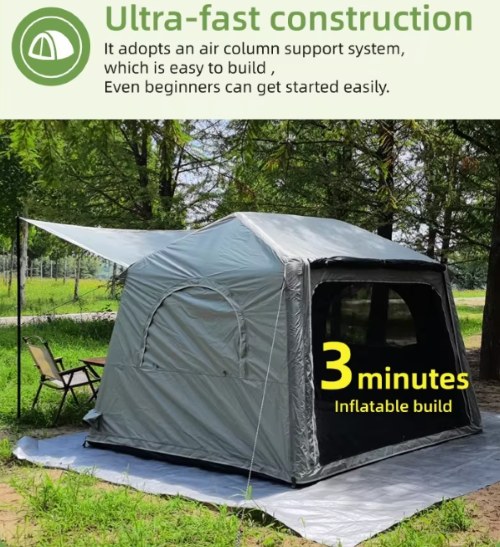
Rapid deployment inflatable tents can reduce the work of assembling separate poles, but inflation time is not the same as time to usable shelter. Unloading, checking the site, anchoring, opening vents, and arranging equipment still take work. For frequent moves, improve the entire routine rather than relying on a headline setup-time claim.
Table of Contents
Define when the shelter is actually ready
Choose a practical start point, such as the packed equipment beside the vehicle, and an end point that includes the completed pitch and safe access. Measure inflation separately if useful, but do not let that shorter figure stand in for the whole job.
A rehearsal can reveal where time goes without pretending to be a formal performance test. Record crew size, tent model, surface, wind conditions, pump, and whether the inner tent was already attached. Compare only routines with similar starting conditions.
- Unload and carry the complete kit to the pitch.
- Check the site and lay out the shelter in the intended direction.
- Follow the model’s initial anchoring and inflation sequence.
- Complete guy lines, openings, and the pre-use inspection.
- Place essential equipment without obstructing movement.
Remove preventable delays from the kit
Keep the approved pump, hose, and adapter together, with any required power supply checked before departure. A spare adapter is useful only if it fits the actual valve. Store first-use items where they can be reached without emptying the whole vehicle.
Separate anchors by type when the route includes different surfaces. Label removable beams or accessories by their intended position using a method the manufacturer permits. Keep the instructions accessible offline. The inflatable tent pump guide addresses pump compatibility rather than speed alone.
Give the crew clear jobs
One person can direct the sequence while others handle the tasks they are trained to perform. Avoid two people adjusting the same valve or lifting opposite parts of the shelter without coordination. Follow the minimum staffing in the instructions; a successful solo demonstration does not establish suitability for every site.
For an event installation, use a defined handover before visitors enter. The HSE event-management guidance emphasizes competent staff, coordination, and monitoring throughout site operations. A shorter setup remains useful only if it includes those responsibilities.

Do not treat fast pitching as weather capability
Air-supported construction does not remove the need for a suitable surface or anchoring. A team cannot compensate for unsuitable ground by working faster. Postpone or relocate when the documented installation requirements cannot be met.
Keep a separate weather decision point before unpacking and before opening. A fabric tent is not emergency refuge from lightning or severe wind. The outdoor event tent setup checklist includes weather planning and opening checks that apply regardless of how quickly the beams inflate.
Count pack-down and the next day's reset
For repeated moves, log the complete pack-down as well as setup. Remove equipment, lower the shelter in the instructed sequence, retrieve every anchor, and pack without crushing valves or trapping air. Keep wet fabric separate from dry items during transport and arrange drying before storage.
The next deployment starts with the condition left by the previous one. Note a leaking valve, damaged line, or missing fitting immediately and take faulty equipment out of the ready kit. Do not move an erected tent unless the manufacturer provides an approved method for doing so.
If the measured process is still too slow, reduce unnecessary interior equipment or choose a more manageable shelter size. Do not eliminate anchoring or inspection steps to make the recorded time shorter.
FAQ
How many minutes should deployment take?
No universal time is defensible without a model and setup conditions. Time your full routine with the intended crew, pump, anchors, and interior requirements.
Are inflatable tents always faster than pole tents?
No. A simple pole shelter can be quick, while a large air tent may need substantial unloading and anchoring. Compare equivalent shelters through the complete process.
Can I omit drying when moving again tomorrow?
A damp transfer may be unavoidable, but provide a drying opportunity and follow care instructions. Repeated wet packing should not become the normal storage routine.