


An inflatable tent vs pole tent setup comparison should include the whole stay: pitching, checking the shelter, dealing with a fault, and packing it away. Air beams replace some rigid supports with pressurized chambers; pole tents use assembled or integrated rigid supports. Both still need the correct pitch, anchoring, and fabric tension.
Table of Contents
Lay out everything needed to make it usable
With an inflatable model, identify the pump, correct adapter, valves, and separate chambers before the first trip. A compatible-looking pump connector is not enough; use the equipment and pressure instructions specified for that tent. Practice accessing valves without standing on the fabric.
With a pole tent, sort poles by their intended sleeves or attachment points and check that joints seat fully. Integrated poles change the sequence but do not remove the need to inspect it. In both designs, follow the instructions for when to secure the base and when to tension the fly.
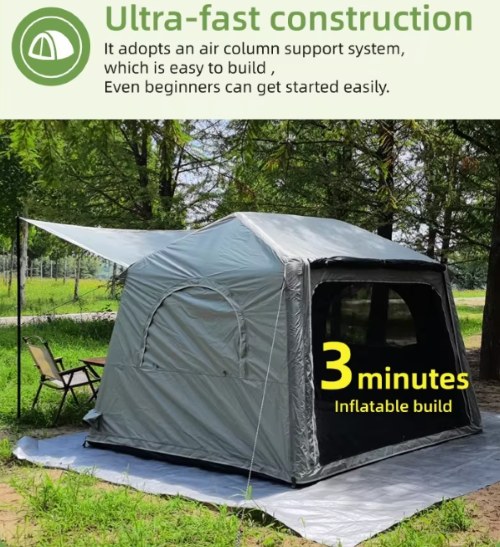
Compare labor, not a headline pitching time
Timing only inflation or pole insertion leaves out spreading the groundsheet, anchoring, guy lines, bedding, and final adjustments. For a useful comparison, consider the same-size sleeping area with all weather protection installed and the same number of people helping.
A pump can reduce some overhead pole handling, while a pole system may avoid carrying inflation equipment. Neither fact proves that one tent is easier for every camper. Check lifting, reaching, kneeling, and bag handling as well as the raising process. The inflatable tent pump guide explains the equipment side of that tradeoff.
Know what an incomplete setup looks like
For air beams, compare their shape and pressure with the maker’s instructions, and confirm valves are in the correct operating position. Do not keep adding air to solve a fabric alignment problem. If the tent changes shape unexpectedly, stop and investigate rather than assuming more tension will correct it.
For poles, check that ends sit in their intended fittings and that sections have not been left partly engaged. A misrouted pole or twisted sleeve can pull one corner out of position. Inspect guy lines and fabric clearances on both constructions once the complete frame is established.

Pack a repair plan matched to the structure
An air-beam fault may involve a valve, a replaceable bladder, or another model-specific component. A pole fault may require an approved repair sleeve or replacement section. Carry the appropriate parts and instructions, not a collection of adhesives that may be incompatible with the fabric.
Learn which repairs the manufacturer allows in the field and when the shelter should be taken out of use. Never open a structural air-beam sleeve under pressure. The camping tent repair-kit guide is a useful companion for organizing those supplies before departure.
Plan for wet packing and unsafe weather
Check the dismantling sequence before trying it in rain. Keep dirty stakes and rigid parts away from vulnerable fabric, and pack wet components temporarily only when necessary. Reopen and dry the tent promptly after the trip according to its care instructions; a convenient bag is not a drying environment.
Neither construction makes camping safe through every storm. The National Weather Service’s camping advice is to seek a suitable building or vehicle when thunder is heard, not shelter in a tent. Select the camping arrangement around the forecast and an exit plan, rather than expecting the frame type to replace those decisions.
FAQ
Can one person pitch either type?
Some models permit it and others require help. Follow the stated crew instructions and consider the size, weather, and your ability to handle the complete tent.
Do inflatable tents eliminate all poles?
Not necessarily. Some designs still include rigid supports for porches or other parts. Check the complete component list.
Which is easier to repair at camp?
It depends on the fault and available approved parts. Familiarity with that tent’s repair procedure matters more than a general claim about either frame type.