


The useful air beams vs tent poles comparison is about where each design moves the work. Air beams remove some pole assembly, while pole tents can offer separate components that are easier to divide between bags. Neither frame automatically creates a lighter, stronger, or more weatherproof camping tent.
Table of Contents
Compare the same kind of camping space
A compact pole tent and a large standing-height air tent answer different needs. Start with similar sleeping capacity, usable living area, fabric arrangement, and intended conditions. Otherwise, differences caused by size may be incorrectly attributed to the frame.
Include all required accessories in weight and packed-volume comparisons. For air tents, that includes the appropriate pump; for pole tents, count every pole set and any separate fly. Compare what you must transport to have a complete usable shelter.
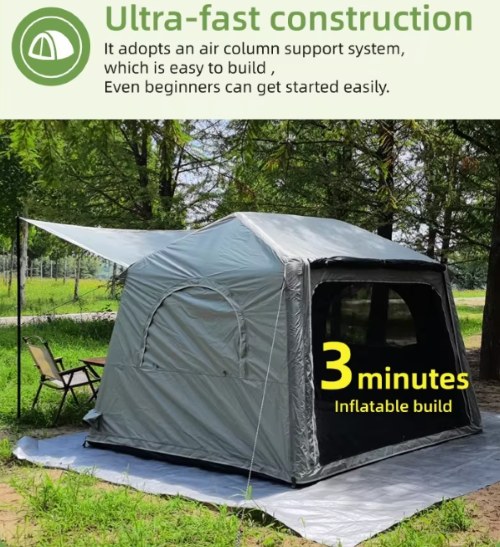
Inflation changes one part of pitching
Air beams replace the assembly and positioning of some structural poles with pumping. The convenience is greatest when pole threading or raising a large body is the part you find difficult. It is less decisive when most of your time goes into organizing the pitch and bedding.
The Camping and Caravanning Club notes that pegging remains necessary with either construction. For independent travel, the solo inflatable tent setup guide evaluates the complete job rather than the inflation step alone.
Carrying and packing favor different details
A removable pole bag can be carried separately from the fabric, which may suit a group sharing loads. An integrated air-beam body may remain a single large package. Actual construction varies, so handle the complete model rather than assuming every pole tent splits easily or every air tent packs compactly.
Takedown matters too. Poles need orderly disassembly and storage; air chambers need the instructed deflation and folding sequence. Try repacking after a normal pitch. A neat showroom bundle says little about how easily you will pack on departure morning.

The failure modes are different, not absent
Pole damage may involve a bent section, broken connector, or split composite part. Air-system problems may involve a valve, bladder, or connection. The useful comparison is whether compatible replacements and an understood repair method are available for the exact tent.
Do not assume a patch can fix every air leak or a repair sleeve can solve every pole failure. Access, damage location, and the repair instructions determine what is possible. The camping tent repair kit guide helps distinguish structural spares from fabric repairs.
Keep weather claims separate from frame preference
Rain protection depends on the assembled shelter, including openings, seams, fabric, and pitching. Wind suitability likewise needs evidence for that design and its installation conditions, not a claim that flexible automatically means stormproof.
Air beams do not make a tent lightning-safe. The NWS explanation of lightning myths rejects the idea that metal attracts strikes, and its outdoor guidance states that tents are not safe shelter. Choose a frame for practical handling, not a false safety advantage.
FAQ
Are inflatable tents always quicker?
No. They may simplify raising the structure, but tent size, anchors, ground conditions, and familiarity affect total setup time.
Are pole tents easier to repair remotely?
Sometimes, if the relevant pole parts and repair method are available. Compare model-specific repair options rather than treating either category as universally field-repairable.
Which frame is best for a family staying in one place?
Either may work. Prioritize the full room arrangement, carrying effort from the vehicle, and setup routine the adults can manage.