


Inflatable tents for adventure tours need to fit the route, transport arrangements, available pitching areas, and repair plan. Include the pump and anchoring equipment in the carried load, and verify the shelter’s intended conditions before relying on it away from established facilities.
Table of Contents
Separate vehicle-supported tours from carried trips
A shelter moved between camps by vehicle has different constraints from one carried all day. For a supported tour, check vehicle loading space, unloading access, and the distance from parking to each pitch. For a walking route, assess the complete shelter package against the group’s carrying plan.
Air beams do not make a tent inherently lightweight or compact. Count the pump, adapters, anchors, repair materials, and bags alongside the fabric and support system. If the load is unsuitable for the route, choose a different shelter rather than leaving required equipment behind. Our inflatable tent hiking guide focuses on the carried-load decision.
Check every planned overnight stop
Confirm the tent footprint, space for guy lines, permitted anchoring methods, and access to the site. A large shelter can be comfortable at a base camp yet impractical on a small designated pad. Do not plan to enlarge a pitch or omit anchors to make it fit.
The NPS before-the-trip guidance recommends checking site conditions, hazards, and equipment before departure. For a moving itinerary, repeat that planning across the route rather than assuming the first campsite represents all later stops.
Give the pitching team clear roles
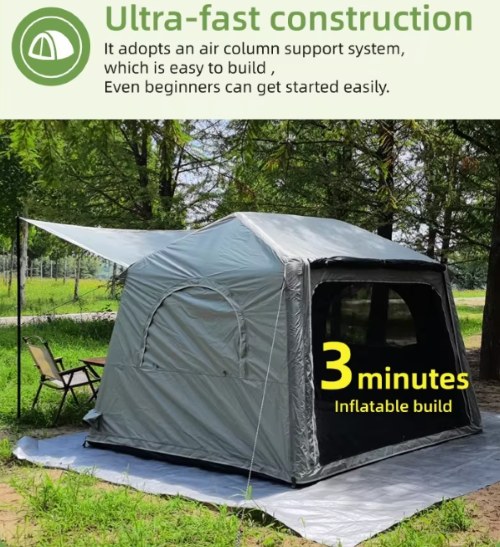
Practice with the people who will erect the tent. One person can manage the parts and instructions while others handle the structure as directed, but the required crew size comes from the actual model and conditions. Include site preparation and anchoring when evaluating setup effort.
Make the correct pressure, valve arrangement, and inflation order available without an internet connection. Keep the compatible pump easy to reach during unloading. The air-pressure guide explains why model instructions and gauge readings matter more than making every beam feel equally hard.
Plan repair time as well as repair materials
Check which failures can be repaired in the field and which require a replacement part or departure. Carry only compatible materials, with their application and curing instructions. A repair that needs a clean, dry surface and a long curing period may not restore a shelter during a wet evening arrival.
Identify the correct spare valve parts, bladder, or adapters where the manufacturer supports replacement. Never open a pressurized beam sleeve. Decide how the group will stay sheltered if a chamber cannot hold pressure, rather than assuming every air-system problem is a quick patch.

Use weather limits to change the itinerary
Assess rain, wind, heat, and cold separately. A waterproof fabric claim does not establish wind tolerance, and an air-supported frame does not supply overnight insulation. Follow documented operating limits and local conditions; an unsupported all-season label is not a route plan.
Choose an alternative before conditions force the decision. The National Weather Service identifies tents as unsafe lightning shelter. On remote routes, where suitable shelter may be unavailable, prevention and itinerary changes matter more than trying to make the tent a refuge from every hazard.
Build drying and fault checks into travel days
Separate damp shelter fabric from dry sleeping equipment during transport. Use suitable opportunities to dry it, and inspect high-use connections before packing the kit again. Record any recurring pressure loss or damaged attachment so another crew member does not mistake the same defect for a new setup issue.
At the end of the tour, fully dry and service the shelter before returning it to storage. A repeat itinerary benefits from a record of pitch constraints, missing equipment, and real setup difficulties, not from an invented universal time saving.
FAQ
Are inflatable tents suitable for backpacking tours?
Only when the specific model’s complete weight, bulk, weather suitability, and support equipment fit the route and group. Many larger models are better evaluated for vehicle-supported use.
Can one pump serve several tents?
It may, if the connections and pressure requirements match, but consider setup delays and the consequences if that shared pump fails.
Do I need a backup shelter plan on a supported tour?
Yes. Vehicle support does not guarantee that a damaged tent, unsuitable pitch, or weather disruption can be resolved before nightfall.