


The most useful family camping tent features solve ordinary problems: getting out at night, changing wet clothes, finding a light, and fitting the bedding you already own. Start with those routines rather than the largest advertised capacity. A tent can fit everyone lying down and still feel cramped whenever someone needs to move.
Table of Contents
Measure beds before counting berths
Record the actual dimensions of sleeping mats or air mattresses, including their inflated edges. Compare them with the bedroom floor, not the total area under the fly. Allow a route to the door and room for essential clothing rather than filling the entire drawing with mattress rectangles.
The National Park Service notes that tent capacity describes sleeping space, not necessarily room for people plus equipment. For a more detailed arrangement, use the family tent room layout guide.
Try the doorway as the shortest person will use it
Check whether children can manage the zipper without pulling the whole door sideways, while still allowing appropriate adult supervision. Look at threshold height, reach to upper pulls, and the space needed to step over or through the entrance.
Two doors can reduce climbing over sleepers, but only if both remain accessible after bedding and bags are installed. A wide opening behind a table is not a useful second exit. Consider nighttime routes with the lights off and a headlamp in hand.
Separate bedroom privacy from genuine room space
A hanging divider can give privacy but does not make two equally usable rooms. Check where it meets the floor, whether it blocks access to pockets or windows, and whether it can be tied back when the family needs shared space.
Standing height is usually greatest near the center. Look at usable height where someone will actually change clothes or sit on a bed. Tall air mattresses can bring shoulders and bedding closer to sloping walls, even when the floor plan appears generous.
See what stays usable when it rains
Check which vents can remain open under their weather covers and whether opening the main door exposes the bedding to roof runoff. A covered entrance can make shoe changes easier, but its gear space should not be counted twice as both storage and circulation.
Plan a dry-clothing position separate from wet waterproofs. Keep bags from pressing against vents and inner walls. The camping tent ventilation guide explores airflow; more sealed fabric is not automatically more comfortable in wet weather.

Check the packing and setup workload
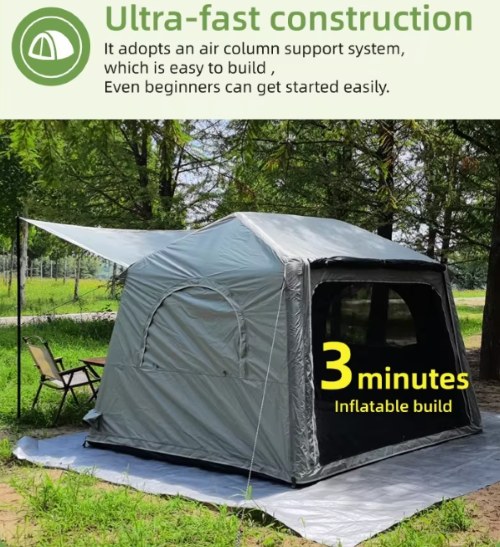
Think through who will pitch the tent while others manage children and equipment. A large air tent still needs unloading, inflation, anchoring, and drying. A pole tent still needs its parts identified and assembled correctly. Use a practice pitch to discover which steps require another adult.
Measure the packed bag against the car’s actual luggage space and the route from parking to the pitch. Consider the damp return journey too: you need a place to open and dry the tent at home, not just enough storage space for the dry factory bundle.
Keep comfort features within safety limits
Use battery lighting and the designated hanging points. Do not add a stove, barbecue, or fuel-burning heater to create an indoor living room. The CPSC warns that combustion-powered camping equipment can cause fatal carbon monoxide poisoning inside tents.
Treat room dividers, zip closures, and storage pockets as conveniences rather than child-safety barriers. Keep exits clear and maintain supervision appropriate to the children and site. A comfortable layout should make daily routines simpler without creating false confidence about protection.
FAQ
Should a family of four automatically buy a four-person tent?
No. Compare the bedroom measurements with your actual bedding and movement needs. Capacity labels do not describe the full living arrangement.
Are separate bedrooms essential?
They can help with privacy and different bedtimes, but a divider that consumes useful floor space may be less helpful than one open room with easier access.
Is the biggest tent the most comfortable?
Only if you can pitch, transport, dry, and fit it on suitable sites. Extra area that creates a difficult setup or blocks the pitch may not improve the trip.