


A campsite dry zone is a protected place to change shoes, sort wet equipment and keep clean belongings out of mud. It is not a promise that a mat or canopy can make any pitch dry. Start with suitable ground, then arrange a small transition area between the exposed campsite and your sleeping space.
Table of Contents
Find out where the water will go
Before spreading a mat, look for depressions, existing puddles and routes that runoff could take through the pitch. Position the shelter on an appropriate established area rather than putting a waterproof layer over an obvious collection point. Do not dig channels or alter the campsite to divert water.
The National Park Service identifies flash flooding among campsite hazards. If rising or flowing water threatens the site, relocate safely; arranging equipment higher on a rack is not a response to a flood risk.
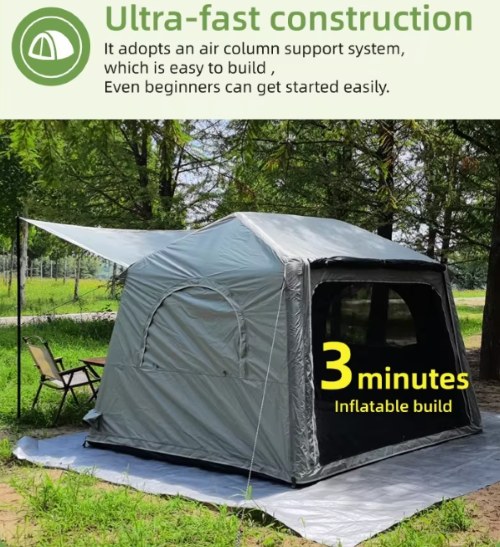
Create an exposed edge and a clean edge
Place muddy shoes where they can be removed before stepping onto the clean mat. Leave a small space to change footwear without standing in the doorway. A boot tray can contain dirt, but empty collected rainwater rather than letting it become a basin beside the tent.
Use the protected side for dry socks, a towel and bags that must stay clean. Avoid laying wet waterproofs over those items while you get organized. The vestibule setup guide is useful when this transition takes place under a tent’s entrance cover rather than a separate canopy.
Choose mat placement by how it drains
Keep the occupied portion within the shelter’s effective coverage, including its drip line. A mat extending well beyond the roof can collect water on its surface and bring that water into the sitting area. Fold or move it only as its construction allows, keeping edges flat so they do not become trip points.
A water-resistant backing helps separate belongings from damp ground but does not necessarily stop moisture through seams or edges. The upper surface may still become soaked by rain. Compare picnic mat backing materials if you need to understand that difference before choosing a mat for the transition space.

Keep storage practical, not merely elevated
Use closed containers for dry spare clothing where appropriate, but do not seal damp textiles inside them. Place frequently used items where you can retrieve them without kneeling in mud. A stable shelf can separate belongings from ground moisture only when the shelf and its contents are suitable for the location.
Keep heavy containers low within the rack’s stated limits, and leave the path through the dry zone clear. Do not hang loaded bags from tent fabric or unapproved loops. Food remains subject to local wildlife-storage rules; a tidy corner under a shelter is not secure food storage.
Reset the boundary after rain
Remove pooled water and lift the mat to check underneath when conditions permit. Dry its top and underside separately before packing. Shake or brush off loose dirt away from the clean equipment rather than transferring it to bedding while rolling the mat.
At pack-down, put wet shelter fabric and muddy footwear in a separate temporary load from dry sleeping gear. Once home, open and dry those items promptly according to their care instructions. That final separation prevents a useful campsite dry zone from turning into damp luggage during the journey home.
FAQ
Can a picnic mat keep bedding dry overnight?
It should not replace a suitable tent floor or sleeping system. Rain, edge entry and surface moisture can still reach items placed on it.
Where should wet jackets go?
In a protected, ventilated place away from bedding and the clean change area, without blocking tent vents or adding unsupported loads to the structure.
What if water is running through the pitch?
Treat that as a site problem, not a mat problem. Move to a suitable location when safe and follow campground or emergency instructions.