

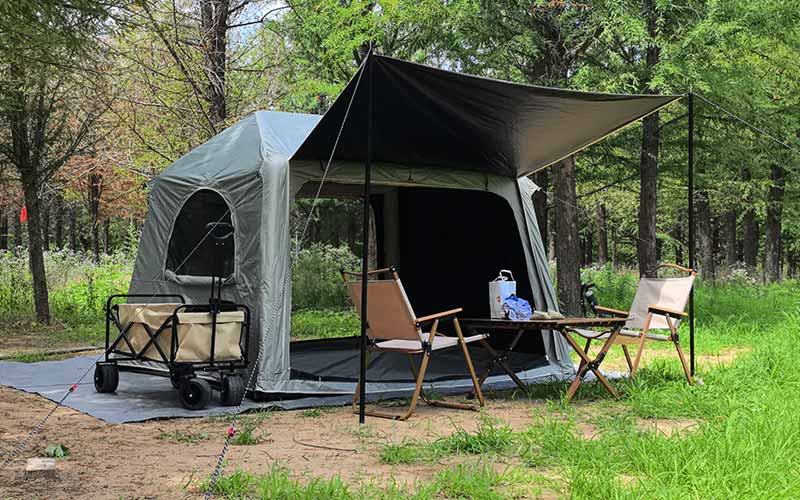
A camping table and chairs arrangement should fit the occupied campsite, not just the empty floor plan. Check seating clearance, stable ground contact, and the space needed to fold and stow each piece.
Table of Contents
Reserve the tent entrance first
Identify the route from the tent door to the path or vehicle before placing furniture. Keep the area where someone steps out clear of chair legs, table corners, and trailing straps. Do not make a seated person move every time another camper needs to enter the tent.
Work within the allocated pitch instead of solving a tight layout by spreading outward. The National Park Service’s campsite etiquette guidance asks campers not to encroach on neighboring sites. Include pulled-back chairs in your boundary check, not merely the tabletop.

Try the arrangement with everyone seated
Place chairs where people will eat, then sit down before deciding that the set fits. Check whether knees meet braces, whether armrests prevent a comfortable approach, and whether the nearest shared dish is within ordinary reach. Leave a place to set a plate without balancing it on a joint or narrow edge.
Ask one person to stand and walk around the occupied group. This reveals pinch points that are invisible with empty chairs tucked in. The table-and-chair sitting-position guide explores the chair height and tabletop relationship in more detail.
Separate meal space from stored equipment
A cooler under the table may appear efficient until its lid cannot open between seated legs. Put frequently accessed containers where they can be opened without moving a chair, while following the site’s food-storage rules. Keep bags away from places where they become footrests or trip hazards.
Use the surface for the meal instead of storing every kitchen item there. Clear equipment after preparation so cups and dishes have predictable places. When a small table cannot support both cooking and dining tasks in a suitable configuration, keep those jobs separate rather than crowding hot equipment beside seated people.
Check every foot on the actual ground
Engage each furniture mechanism as instructed, then check the support points independently. A level table can sit beside a chair whose rear feet are sinking. Move the arrangement when the ground cannot support it reliably; an adjustment on one item does not correct the whole set.
Follow each chair’s occupant limit and the table’s load instructions. Shared styling does not create a shared capacity. Do not place furniture directly on a vulnerable tent floor without suitable protection, and keep it clear of the fabric walls. Our tent floor protection guide covers furniture contact inside shelters.

Allow for evening changes
A dining arrangement may need to become a sitting circle later. Plan where the table will go before moving it into the entrance route. Use lighting that makes furniture legs and nearby lines visible without shining into adjacent pitches.
Bring loose accessories in before wind or rain creates a hurried cleanup. Store folded chairs where they cannot fall across the doorway, and leave enough working space to lower or fold the table without trapping fingers against other equipment.
Pack in a deliberate order
Clear the top and under-table area first, then fold the furniture in its specified sequence. Count removable components and dry wet fabric before long-term storage. If the complete arrangement repeatedly overwhelms the pitch or transport space, take fewer pieces on the next trip rather than repeating the same cramped setup.
FAQ
How much room should I leave behind a chair?
Enough for the actual users to sit, stand, and pass without touching lines or other furniture. Check the occupied arrangement rather than relying on an arbitrary universal measurement.
Can I use matching chairs at a different table?
Yes, provided the sitting height, arm clearance, and leg space work together. Appearance does not determine compatibility.
Should the table stay under the awning all day?
Only when that position remains appropriate for weather, access, and the shelter’s instructions. Be ready to relocate or pack it when the arrangement stops working.