


A comfortable campsite setup lets you do ordinary things without moving half the camp first: take off wet shoes, find a headlamp, sit down to eat, and get out of bed at night. Arrange the essentials around those movements before adding more furniture or a larger shelter.
Tabla de contenidos
Walk the pitch before unloading
Find the approved tent position and identify the existing table, food storage, water access, and route to facilities. Notice where other campers need to pass. Leave the vehicle packed until you know which items the site already provides and where your own equipment will go.
Choose a practical relationship between sleeping and daytime areas without moving outside the designated pitch. Our tent placement guide goes into the ground and access considerations that should come before decoration.
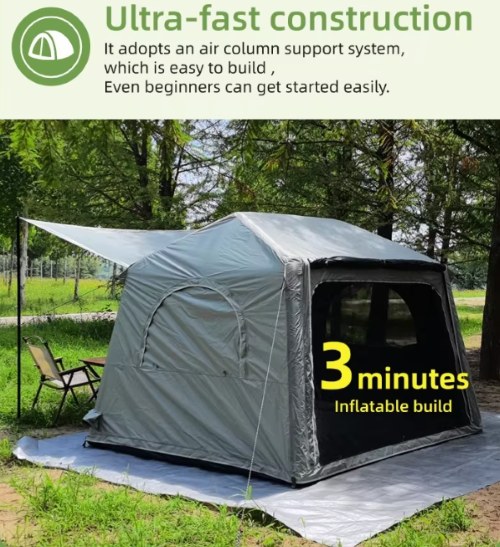
Give the entrance a single purpose
Keep the doorway as a transition space: footwear off, wet outer layers contained, dry items passed inside. Avoid filling it with a cooler, spare chair, and an open bag simply because they arrived first. Leave enough room to operate the door without standing on bedding.
A small mat can be useful where its backing suits the surface and it does not curl into the walking route. Shake off grit away from the sleeping area. For a covered entrance, the tent vestibule setup article explains ways to separate muddy equipment from indoor space.
Build the sleeping area before the lounge
Place the mats or beds, then check whether people can enter, change clothes, and reach their own belongings. Give glasses, medicines, and lights a consistent location. A spare corner is useful only if reaching it does not mean climbing across someone else.
Use small bags for clean sleep clothing rather than opening the whole clothing case each evening. Leave ventilation openings unobstructed, and do not use the tent wall as a support for damp bedding. Reserve the best sheltered indoor space for sleep rather than seldom-used equipment.

Keep meal preparation out of the sleeping shelter
Put dining seats where people can pull them back without crossing tent lines. Keep preparation equipment on a suitable stable surface and use cooking appliances only as their instructions and site rules allow. A dining table and a stove station need not be the same piece of furniture.
Never move a fuel-burning stove or barbecue into the tent or enclosed porch to escape rain. CDC camping safety guidance warns against operating fuel-burning equipment inside tents because of carbon monoxide. Wet-weather comfort needs a safe meal alternative, not indoor combustion.
Reset for nighttime movement
Before dark, return loose gear to storage, clear the route to the exit, and check that everyone can find a light. Put daytime furniture back within its intended area. An arrangement that looks spacious in daylight may become awkward when chair legs and guy lines are hard to see.
Store food and scented items according to the destination’s rules, not wherever they are easiest to reach from bed. The NPS food storage guidance explains why campsite food security matters. An open shelf or tent pocket is organization, not wildlife-resistant storage.
Preguntas frecuentes
What is the first comfort upgrade to make?
Fix the problem that interrupts the trip most often. An uncomfortable sleeping mat, blocked entrance, or inaccessible light usually deserves attention before decorative accessories.
Does a bigger tent always create a better camp?
No. It may reduce outside living space or exceed the approved pitch. Test the full arrangement, including entrances, lines, furniture, and walking routes.
Should every item have its own storage box?
Not necessarily. Group items by use, such as sleep, cooking, or cleaning, while keeping anything needed urgently easy to reach.